Showing posts with label cash flow. Show all posts

Monday, August 27, 2012

The Basics of Mezzanine Financing


So you’ve got the ‘billion dollar expansion idea’ for your company.  Now it’s time for you to raise the capital before you begin.  Determining which method of financing you are going to pursue is nearly as important as the business itself.  Certain amount of research is necessary to ensure you are picking the finance option that works best for you and your business.

It’s nearly impossible to talk about mezzanine financing without first touching on the basics of debt and equity financing.  The reason for this is due to the hybrid nature of mezzanine.
 
In basic form, mezzanine financing is essentially debt capital that can be turned into equity capital.  Here are a few definitions to consider when thinking about this hybrid:

Debt capital: Basically a loan.  The borrower will be given money from a lending agency with an agreement to eventually pay it back.

Equity capital: A financial exchange.  The lender will give capital on the basis that it will be exchanged for ownership or stock in the business.

Mix those two definitions up and you will have a good idea what mezzanine financing consists of.  This type of capital starts off as debt capital, however if a loan is not paid back in full, or on time, the lender has the rights to convert their investment into equity capital.
 
These aggressively priced loans are a great way to finance if a quick cash flow is needed.  The main risk relies on the lender, who is given either little or no collateral.  This type of loan is also typically subordinated, which further explains the amount of return that the lenders generally seek. 
When sifting through the financing options, keep in mind the time frame you need the money, the return you are willing to give up, and the amount of risk you are willing to take.  These components vary greatly from option to option, and may be a deal breaker when choosing financing.

Tuesday, February 28, 2012

The Emotional Side of Corporate Debt Restructuring

Image via monitoringsoftwareblog.com

More often than not discussions of corporate debt restructuring fixate entirely on the measurable, concrete benefits gained from the process. Corporate debt restructuring will make your payments fixed and significantly more manageable. Corporate debt restructuring will improve your organization’s cash flow and allow it to expand its operations and grow to the next level within its industry. Corporate debt restructuring will eliminate the fees and charges choking your profits while improving relations with your lenders, suppliers and contractors. But the emotional benefits derived from pursuing corporate debt restructuring are arguably even more important.

Business is, at its heart, about relationships. The relationships between co-workers, the relationships between lenders and business owners, and the relationships between business owners and their company. All of these relationships are damaged when a business is loaded with more debt than it can handle. Coworkers are constantly under pressure because they believe the only way to escape their company’s financial woes is by working harder and harder and harder. The relationship between business owners and suppliers, lenders and contractors is stretched to the breaking point. After all, a loan or services rendered without upfront payment are provided on account of trust between everyone involved. Finally, a business owner stands no chance of enjoying their company and expressing their love and passion for their organization when they are saddled with a crushing debt load.

All of these relationships are healed and mended during a corporate debt restructuring. While increased cash flow is important, so is restoring the trust, love, passion, and feelings of self-worth that find themselves lost when debt becomes a monumental problem.

Tuesday, February 14, 2012

Look Elsewhere for a Magic Bullet Cure for Debt


Corporate debt restructuring almost always has an immediate positive effect on the organizations that pursue it. Companies that restructure their debt tend to improve their cashflow, restore their relationship with their lenders and suppliers, and fix their debt problems in private. Yet as positive as it generally is, corporate debt restructuring is NOT a “magic bullet cure” for your company’s debt problems. Instead it should be seen as a “better option” than more drastic measures.

If your company suffers under a large debt load then you’ve probably considered declaring bankruptcy. While bluntly effective in removing a debt burden, declaring bankruptcy is not a viable option for the survival of your business and for your ability to create another business in the future. Debt removed during a bankruptcy doesn’t simply “go away.” Sure, under the terms of most bankruptcies you won’t need to pay another dollar on those debts, but the fact you and your company defaulted on those loans will become a matter of public record. Bankruptcy will all but kill your company’s ability to be seen as an eligible borrower in the future and it will create similar damage on your personal lending profile. The specter of your debt will linger in highly unfavorable ways, for a very long period of time, after you’ve successfully declared bankruptcy.

Corporate debt restructuring, by contrast, is a private matter negotiated between you and your suppliers, your contractors, and your general lenders. While these lenders would naturally prefer you stuck to your existing repayment plan, they would rather renegotiate your terms then risk losing your loan entirely through bankruptcy. So even though corporate debt restructuring isn’t a “magic bullet” cure for debt problems, it is superior to many other resolutions for both you and the organizations you owe.

Wednesday, January 18, 2012

Payable Restructuring: Why Your Business Won't Go Bankrupt


Image via Small-business-accounting-info.com
Business bankruptcy may feel inevitable when you face a huge mound of debt payments draining away your potential profits and preventing you from building the infrastructure you need to reach a favorable market position. Yet business bankruptcy is not inevitable, provided you take the right steps. And one of the best steps you can take to prevent business bankruptcy is restructuring your account payables.

Why will a simple restructuring of your accounts prevent your business from going under? When you restructure your accounts intelligently you will be able to create positive cash flow where previously you only saw red. Restructuring your account payables will reduce the size of the monthly liabilities preventing your company from achieving profitability. And one of the most common reasons why businesses go bankrupt lies in a lack of profitability and a lack of positive cash flow due to an overwhelming number of regular debt payments.

The key to avoiding business bankruptcy lies in being able to make all of your payments and financial obligations every single month. By restructuring your business debts you will be able to make sure your monthly financial obligations are always manageable, no matter how large of a debt underlies them.

Thursday, November 17, 2011

Accounts Receivable Factoring

Image via Income-outcome.com

Many companies are choosing accounts receivable factoring as a way of restructuring their organizations, increasing cash flow and improving their financial statements. If you own a company, and feel a cash crunch, accounts receivable factoring might be right for you.

Accounts receivable accounts are debts that your customers owe and are often called receivables. Accounts receivable factoring works by selling your accounts receivable accounts and balances to a financial organization, or investor, who is willing to purchase them. When this occurs, you sell the balances at a discounted amount, and receive immediate cash for them. An investor is likely to use a certain percentage as a way of calculating what these debts are worth.

Investors choose to purchase these receivables, because of the future value they have. Organizations are often willing to sell these collectibles at a discount, by thinking of the fee as a cost of generating revenues and cash.

One primary purpose for using accounts receivable factoring is to improve your cash flow. Businesses with little or poor cash flow often suffer problems continuing their operations. By using accounts receivable factoring, you will improve your cash flow. You will not have to wait to collect these accounts, and you give the burden of collecting them to a third party.

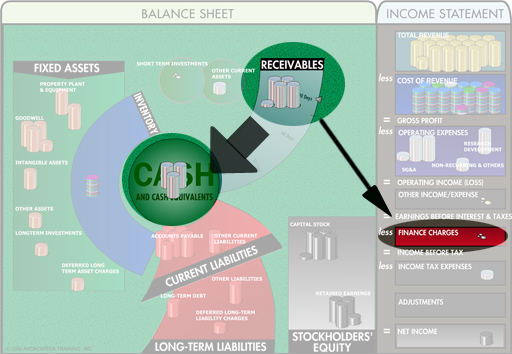
A common alternative to accounts receivable factoring is taking out a loan. Many people are opposed to this, because with a loan, you will pay interest on the borrowed money; which can often amount to more than what a company will purchase the accounts for. In tough economic times, you might not even be able to obtain a loan, and if you do, the loan rate might be extremely high. Another reason why you should choose factoring over a loan is the effects on your company’s financial statements. A loan increases your liabilities on your company’s balance sheet, while factoring swaps one asset for another. So before your company experiences cash flow problems, consider accounts receivable factoring.

Thursday, August 4, 2011

Myth: 3rd Party Negotiators Will Ruin the Relationship between Customer and Vendor

Image via Financialanalystresume.net

Many businesses go through phases of financial strain during their existence. The economy and other outside factors will cause fluctuations in cash flow and profits.  These negative cash flow cycles will provide a need for financial restructuring and negotiation by a third party. There is no need to consider bankruptcy and face the associated financial implications.  You have options that will help restore your profitability.
 
Once of the common myths is that third party negotiators will ruin the relationship between companies and vendors. This is usually due to a company not choosing the right negotiating party.  Third party negotiators like American Corporate Turnaround want both the company, as well as the vendor to experience a win-win situation.  In the current economic environment, many businesses are facing mounting payables with the slowdown of sales.  With the banking community reluctant to lend and credit card lines being reduced, companies are looking for a lifeline with their current vendors.   A third party negotiator will employ a methodology that will create a harmonious relationship between the company and vendor.

Benefits of debt negotiation:
*  Avoid Bankruptcy
*  Soothe relations with current vendors
*  Save time by allowing 3rd party to handle all negotiations
*  Avoid legal fees
*  Create cash flow
*  Keep necessary supply shipments flowing
*  Salvage company’s credibility
 
At American Corporate Turnaround, our goal is to always preserve the relationship between our clients and vendors. American Corporate Turnaround explores all options that are open.  As we explore our client’s current balance sheet, we will be able to lay out all the alternatives so the correct choice can be made.

American Corporate Turnaround is a 3rd party mediator between the company and the vendor.  We are experienced financial analysts and we are always striving to get the best result for our clients. As our slogan says “We Make Un-Payables-Payable”.