Showing posts with label restructuring. Show all posts

Tuesday, February 14, 2012

Look Elsewhere for a Magic Bullet Cure for Debt


Corporate debt restructuring almost always has an immediate positive effect on the organizations that pursue it. Companies that restructure their debt tend to improve their cashflow, restore their relationship with their lenders and suppliers, and fix their debt problems in private. Yet as positive as it generally is, corporate debt restructuring is NOT a “magic bullet cure” for your company’s debt problems. Instead it should be seen as a “better option” than more drastic measures.

If your company suffers under a large debt load then you’ve probably considered declaring bankruptcy. While bluntly effective in removing a debt burden, declaring bankruptcy is not a viable option for the survival of your business and for your ability to create another business in the future. Debt removed during a bankruptcy doesn’t simply “go away.” Sure, under the terms of most bankruptcies you won’t need to pay another dollar on those debts, but the fact you and your company defaulted on those loans will become a matter of public record. Bankruptcy will all but kill your company’s ability to be seen as an eligible borrower in the future and it will create similar damage on your personal lending profile. The specter of your debt will linger in highly unfavorable ways, for a very long period of time, after you’ve successfully declared bankruptcy.

Corporate debt restructuring, by contrast, is a private matter negotiated between you and your suppliers, your contractors, and your general lenders. While these lenders would naturally prefer you stuck to your existing repayment plan, they would rather renegotiate your terms then risk losing your loan entirely through bankruptcy. So even though corporate debt restructuring isn’t a “magic bullet” cure for debt problems, it is superior to many other resolutions for both you and the organizations you owe.

Tuesday, January 3, 2012

The Ugly Truth about Business Bankruptcy

Image via Showbusinessman.blogspot.com
Too many business owners believe as long as they avoid business bankruptcy they won’t have to worry about the health or reputation of their credit. They believe as long they restructure their debt they won’t suffer any of the negative side effects of their poor financial history. Unfortunately, this isn’t the case. The ugly truth about business bankruptcy is the fact it’s nothing more than the end result of a long line of actions which have already devalued your business’ credit.

Should you avoid business bankruptcy? Absolutely. A business which has gone bankrupt looks even worse than a business which merely fell into delinquency. But there’s nothing attractive about a business which fell into delinquency. The moment you are seriously considering credit restructuring it’s likely already too late to keep your credit looking good.

That’s the bad news. The good news is you can minimize the damage to your credit and make sure your suppliers will continue to work with you after you return to solvency if you work with the right professional representation. Hiring representation to negotiate with your creditors will help you arrive at a mutually beneficial restructuring plan, keeping your business operational and providing them with revenue they weren’t previously receiving. When you hire on an outside negotiating team you will also improve your relationship with both your creditors and your suppliers.

Regardless of whether you file bankruptcy or not, if you need to restructure your debt than your credit already sits in bad standing. The first step to rebuilding your credit is restructuring then repaying your debt.

Thursday, November 17, 2011

Accounts Receivable Factoring

Image via Income-outcome.com

Many companies are choosing accounts receivable factoring as a way of restructuring their organizations, increasing cash flow and improving their financial statements. If you own a company, and feel a cash crunch, accounts receivable factoring might be right for you.

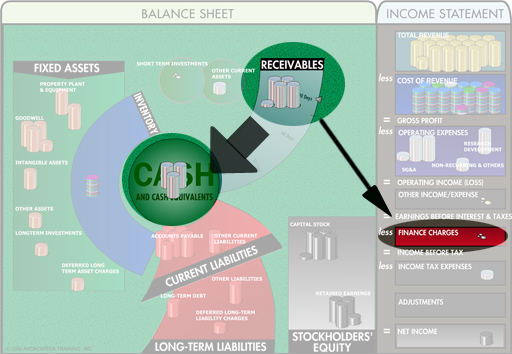
Accounts receivable accounts are debts that your customers owe and are often called receivables. Accounts receivable factoring works by selling your accounts receivable accounts and balances to a financial organization, or investor, who is willing to purchase them. When this occurs, you sell the balances at a discounted amount, and receive immediate cash for them. An investor is likely to use a certain percentage as a way of calculating what these debts are worth.

Investors choose to purchase these receivables, because of the future value they have. Organizations are often willing to sell these collectibles at a discount, by thinking of the fee as a cost of generating revenues and cash.

One primary purpose for using accounts receivable factoring is to improve your cash flow. Businesses with little or poor cash flow often suffer problems continuing their operations. By using accounts receivable factoring, you will improve your cash flow. You will not have to wait to collect these accounts, and you give the burden of collecting them to a third party.

A common alternative to accounts receivable factoring is taking out a loan. Many people are opposed to this, because with a loan, you will pay interest on the borrowed money; which can often amount to more than what a company will purchase the accounts for. In tough economic times, you might not even be able to obtain a loan, and if you do, the loan rate might be extremely high. Another reason why you should choose factoring over a loan is the effects on your company’s financial statements. A loan increases your liabilities on your company’s balance sheet, while factoring swaps one asset for another. So before your company experiences cash flow problems, consider accounts receivable factoring.