Showing posts with label debts. Show all posts

Tuesday, April 2, 2013

Four Questions To Guide In Getting Delinquent Accounts Paid

Image via Naypong / freedigitalphotos.net
With the current state of the economy, many business owners are finding it difficult to manage their accounts payable.  One cause of this is the number of accounts receivable that are delinquent.  If you are not getting paid, it makes it very difficult to pay your creditors.  Following are some tips for getting the money you are owed so that you can efficiently manage your accounts payable.  
1. Are you sending an immediate reminder for missed payments?
One way to get your delinquent accounts paid is to send a reminder to the delinquent customer the day after the payment is missed.  Use friendly language, particularly if the customer does not have a habit of being late with payments.  If it is an oversight, you may be able to collect immediately.  If the customer is aware that they have not paid you, you will be catching the problem early before another payment is missed.
2. Are you sending email or postal mail reminders a week before due date?
If you have customers that are habitually late, send them a reminder through email or postal mail a week before the payment is due.  Some customers are late paying due to being unorganized rather than being short of funds.  A reminder before the payment is due may help you get paid on time.
3. Are you making follow up phone calls for late payments?
Follow up with a phone call if you don’t get a payment within a week of sending the reminder for late payment.  It is easy for customers to ignore a letter, but a phone call is more difficult to dodge.  The call may be ignored as well; however, if the customer answers, politely inquire as to when you can expect payment.  If there is a problem, many customers will be upfront in telling you that the payment will be delayed and when they will be able to pay.
4. Are you offering alternative payment options?
If you can be flexible by offering the option of paying the amount owed in installments, then do so.  A small portion every two weeks or monthly is better than a large debt going uncollected.  However, if it seems that the customer is unwilling to work out a plan for repayment, turn the account over to collections.  The longer you wait, the harder it is to recover payment. 

Thursday, November 17, 2011

Accounts Receivable Factoring

Image via Income-outcome.com

Many companies are choosing accounts receivable factoring as a way of restructuring their organizations, increasing cash flow and improving their financial statements. If you own a company, and feel a cash crunch, accounts receivable factoring might be right for you.

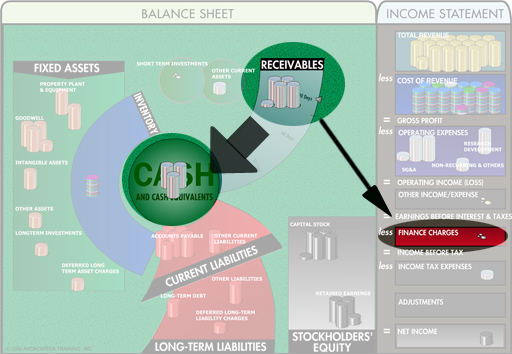
Accounts receivable accounts are debts that your customers owe and are often called receivables. Accounts receivable factoring works by selling your accounts receivable accounts and balances to a financial organization, or investor, who is willing to purchase them. When this occurs, you sell the balances at a discounted amount, and receive immediate cash for them. An investor is likely to use a certain percentage as a way of calculating what these debts are worth.

Investors choose to purchase these receivables, because of the future value they have. Organizations are often willing to sell these collectibles at a discount, by thinking of the fee as a cost of generating revenues and cash.

One primary purpose for using accounts receivable factoring is to improve your cash flow. Businesses with little or poor cash flow often suffer problems continuing their operations. By using accounts receivable factoring, you will improve your cash flow. You will not have to wait to collect these accounts, and you give the burden of collecting them to a third party.

A common alternative to accounts receivable factoring is taking out a loan. Many people are opposed to this, because with a loan, you will pay interest on the borrowed money; which can often amount to more than what a company will purchase the accounts for. In tough economic times, you might not even be able to obtain a loan, and if you do, the loan rate might be extremely high. Another reason why you should choose factoring over a loan is the effects on your company’s financial statements. A loan increases your liabilities on your company’s balance sheet, while factoring swaps one asset for another. So before your company experiences cash flow problems, consider accounts receivable factoring.